Knitting is an art that requires patience, practice, and precision. Before you start any knitting project, you need to cast on.
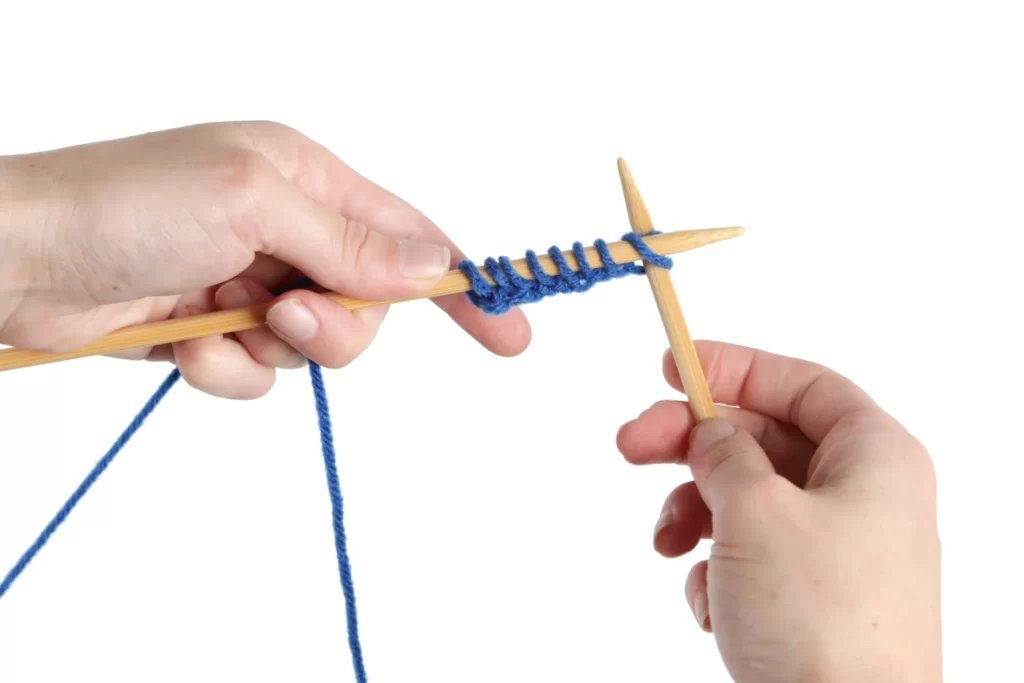
Casting on is the process of creating the first row of stitches on your needle.
This is the foundation of your knitting project, so it’s important to get it right.
In this article, we will go over the different types of cast-on techniques, step-by-step instructions on how to cast on, and some tips to keep in mind.
1. What is Casting On in Knitting?
Casting on is the process of creating the first row of stitches on your needle.
It’s the foundation of your knitting project and sets the tone for the rest of the project.
There are many different types of cast-on techniques, and the one you choose will depend on the type of project you’re working on and the look you want to achieve.
2. Why is Casting On Important?
Casting on is important because it sets the tone for your knitting project. If you don’t cast on properly, it can affect the rest of your project.
A loose cast-on can result in a wobbly edge, while a tight cast-on can make it difficult to knit the first row. So, it’s important to get it right from the start.
3. Different Types of Cast-On Techniques
There are many different types of cast-on techniques, each with its own unique look and purpose. The five most common cast-on techniques are the knitted cast-on, cable cast-on, long tail cast-on, provisional cast-on, and tubular cast-on.
4. Knitted Cast-On
The knitted cast-on is a simple and versatile technique that creates a neat and stretchy edge. It’s perfect for beginners and can be used for a variety of projects.
5. Cable Cast-On
The cable cast-on is a sturdy and secure technique that’s great for projects that require a firm edge. It’s also a good choice for projects that require a bit of stretch.
6. Long Tail Cast-On
The long tail cast-on is a popular and versatile technique that creates a firm and elastic edge. It’s a great choice for projects that require a bit of stretch, such as hats and socks.
7. Provisional Cast-On
The provisional cast-on is a temporary cast-on that allows you to knit in both directions. It’s perfect for projects that require a seamless join, such as infinity scarves and cowls.
8. Tubular Cast-On
The tubular cast-on is a professional-looking technique that creates a seamless and stretchy edge. It’s perfect for projects that require a bit of stretch, such as hats, socks, and sweaters.
9. How to Cast On
Before you start casting on, you’ll need a few supplies. You’ll need a pair of knitting needles, yarn, and a basic understanding of the type of
10. Step-by-Step Instructions for the Knitted Cast-On
The knitted cast-on is a great technique for beginners. Follow these steps to get started:
- Make a slip knot and place it on your needle.
- Insert the needle into the slip knot and knit one stitch.
- Do not slip the stitch off the needle, but instead insert the needle into the new stitch from left to right and knit it.
- Repeat step 3 until you have cast on the desired number of stitches.
11. Step-by-Step Instructions for the Cable Cast-On
The cable cast-on is a bit more complex than the knitted cast-on, but it’s still easy to learn. Here’s how to do it:
- Make a slip knot and place it on your needle.
- Insert the needle into the slip knot and knit one stitch.
- Without slipping the stitch off the needle, insert the needle between the first and second stitches on the left-hand needle, going from front to back.
- Wrap the yarn around the needle and knit the stitch.
- Repeat steps 3-4 until you have cast on the desired number of stitches.
12. Step-by-Step Instructions for the Long Tail Cast-On
The long tail cast-on is a popular technique that creates a firm and elastic edge. Follow these steps to get started:
- Make a slip knot and place it on your needle.
- Hold the needle in your right hand and the tail of the yarn in your left hand.
- With your left thumb, bring the tail of the yarn over the needle from back to front.
- Insert the needle into the loop on your thumb from front to back.
- Bring the yarn under the needle and over the top, forming a loop on the needle.
- Slip the loop off your thumb and tighten the stitch.
- Repeat steps 3-6 until you have cast on the desired number of stitches.
13. Step-by-Step Instructions for the Provisional Cast-On
The provisional cast-on is a bit more complex than the other techniques, but it’s still easy to learn. Follow these steps to get started:
- Make a slip knot and place it on your needle.
- Using a crochet hook, chain the desired number of stitches.
- Slip the last chain stitch onto your knitting needle.
- Knit into the back loop of the second chain stitch from the hook, leaving the chain stitch on the crochet hook.
- Repeat step 4 until you have cast on the desired number of stitches.
14. Step-by-Step Instructions for the Tubular Cast-On
The tubular cast-on creates a seamless and stretchy edge. Follow these steps to get started:
- Make a slip knot and place it on your needle.
- Hold the needle in your right hand and the yarn in your left hand.
- With your left hand, create a “V” shape with the yarn by wrapping it around your thumb and index finger.
- Insert the needle under the first strand of yarn, then over the second strand.
- Knit into the loop on your thumb, leaving the loop on your thumb.
- Repeat steps 4-5 until you have cast on the desired number of stitches.
15. Tips for Casting On
- Practice makes perfect. Don’t be discouraged if your first few attempts don’t look perfect.
- Use the right needle size for your yarn to ensure the correct tension.
- Make sure your cast-on edge is neither too loose nor too tight.
- Don’t forget to count your stitches as you go.
- Use a stitch
16. Conclusion
Casting on is an essential skill that every knitter needs to learn. By mastering the different cast-on techniques, you can achieve the perfect start to any knitting project. Remember to practice regularly and experiment with different techniques until you find the one that works best for you.
17. FAQs
- What is casting on in knitting? Casting on is the process of creating the first row of stitches on your knitting needle.
- How many types of cast-on are there in knitting? There are several types of cast-on techniques in knitting, including the knitted cast-on, cable cast-on, long tail cast-on, provisional cast-on, and tubular cast-on.
- Which cast-on method is best for beginners? The knitted cast-on is the easiest cast-on technique for beginners.
- Can I use different cast-on techniques in one project? Yes, you can use different cast-on techniques in one project, depending on the design and desired effect.
- How do I know how many stitches to cast on for my project? The number of stitches you need to cast on for your project will depend on the pattern and the size of your project. The pattern will usually provide guidance on the number of stitches needed, and you can also use a swatch to determine the correct number of stitches to cast on.
I hope this article has provided you with a comprehensive guide to casting on for your next knitting project. Remember, the key to mastering this skill is practice, so don’t be afraid to experiment with different techniques until you find the one that works best for you. Happy knitting!
Leave a Reply